
CNAME Lookup Fast & Accurate DNS Check Tool
Instantly check CNAME records for any domain. Get detailed DNS information, validate configurations, and troubleshoot domain issues with our free, professional-grade lookup tool.

CNAME Lookup Tool
information
CNAME Lookup
Details
{}
Powerful Features
Everything you need for comprehensive DNS analysis and troubleshooting
Instant CNAME Lookup
Get real-time CNAME records instantly with our optimized DNS query system
Complete DNS Chain
View the entire DNS resolution chain from alias to canonical name
TTL Information
See Time-To-Live values to understand cache duration and propagation
Secure Queries
All lookups use DNS-over-HTTPS for enhanced privacy and security
Multiple Records
Display all CNAME records and related DNS information in one view
Export Results
Easily copy and export DNS lookup results for documentation
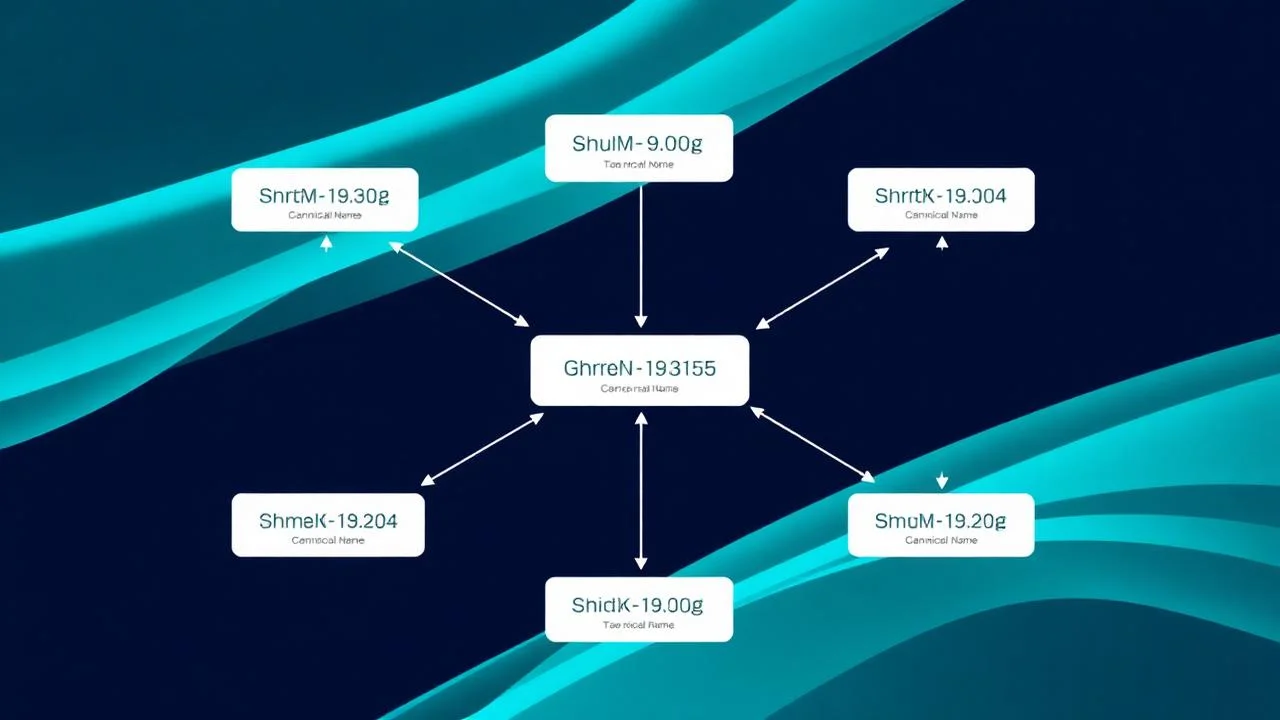
What is a CNAME Lookup?
A CNAME (Canonical Name) record is a type of DNS record that creates an alias from one domain name to another. Instead of pointing directly to an IP address like an A record, a CNAME record points to another domain name.
This is particularly useful when you want multiple domain names to point to the same location, or when you need to easily update where a domain points without changing multiple DNS records.
How CNAME Lookup Works
Understanding the DNS resolution process
Enter Domain
You provide the domain name you want to look up
DNS Query
Our tool queries authoritative DNS servers securely
Retrieve Records
CNAME records and related data are fetched
Display Results
Comprehensive DNS information is presented clearly
Why Use CNAME Lookup?
- Simplified Management
Update one canonical domain instead of multiple A records across your infrastructure
- CDN Integration
Easily point subdomains to CDN providers without changing IP addresses
- Service Migration
Switch hosting providers seamlessly by updating a single CNAME target
- Load Balancing
Direct traffic to load balancers and distributed systems efficiently

CNAME vs Other DNS Lookup
Understanding the differences between DNS record types
CNAME
Points a domain to another domain name
Use Case:
Subdomains, CDN setups, service aliases
Limitation:
Cannot be used at root domain
A Record
Points a domain directly to an IPv4 address
Root domains, direct IP mapping
Requires manual IP updates
AAAA Record
Points a domain directly to an IPv6 address
IPv6 hosting, modern infrastructure
Not all systems support IPv6
Common Use Cases
CNAME lookup tools are essential for various DNS management and troubleshooting scenarios:
- Verify domain redirects and aliases
- Troubleshoot DNS configuration issues
- Monitor CDN and load balancer setups
- Validate subdomain configurations
- Audit DNS security and settings
Common CNAME Configurations
Typical CNAME setups you’ll encounter
WWW Subdomain
www.example.com → example.com
The most common CNAME setup, pointing www to the root domain
CDN Setup
cdn.example.com → cdn-provider.net
Pointing to a content delivery network for faster asset delivery
Email Service
mail.example.com → mailserver.provider.com
Directing email subdomain to hosted email service
App Subdomain
app.example.com → hosting-service.cloud
Pointing application subdomain to hosting platform
Troubleshooting CNAME Issues
Common problems and their solutions
CNAME not resolving
Check TTL values and wait for propagation. Verify DNS server configuration.
Multiple CNAME records
DNS allows only one CNAME per subdomain. Remove duplicate entries.
CNAME at root domain
Use A or ALIAS records instead. CNAME cannot be used at apex domain.
CNAME chain too long
Limit CNAME chains to 2-3 levels to avoid resolution delays.
Mixed with other records
CNAME cannot coexist with other record types for the same name. Choose one.
Propagation delays
DNS changes can take 24-48 hours. Use lower TTL before making changes.
Frequently Asked Questions
Common questions about CNAME records and lookups
What is a CNAME lookup?
It is a DNS query used to find the canonical name a domain or subdomain is pointing to.
Why do websites use CNAME records?
They simplify DNS routing by mapping subdomains to a primary domain.
Does CNAME lookup show IP addresses?
No, it only shows the hostname a domain is mapped to.
Is CNAME lookup the same as DNS lookup?
No, DNS lookup checks all records, while CNAME lookup focuses only on canonical name records.
Can CNAME lookup detect errors?
Yes, it can reveal incorrect mappings, loops, or wrong target domains.
When should I perform a CNAME lookup?
Whenever you update DNS, integrate services, or troubleshoot subdomain routing issues.
Does a CNAME lookup help with CDN verification?
Yes, CDNs like Cloudflare, AWS, and Fastly rely heavily on CNAME mapping.
Can CNAME lookup show third-party service mappings?
Yes, such as email services, SaaS platforms, hosting providers, and apps.
Is CNAME lookup useful during website migration?
Absolutely, it confirms that each subdomain is pointing correctly after migration.
Can I use CNAME lookup for custom domain setup in SaaS tools?
Yes, it canYes, many SaaS platforms require verifying CNAME records during configuration. reveal incorrect mappings, loops, or wrong target domains.
Why is my CNAME lookup showing no record?
Because the subdomain may not have a CNAME entry or is using another DNS record type.
What is a CNAME loop?
It happens when two CNAME records point to each other, causing a DNS failure.
Why does CNAME lookup show outdated information?
DNS propagation may be incomplete or TTL values may still be active.
Can multiple DNS records conflict with a CNAME?
Yes, a CNAME cannot coexist with A, MX, or TXT on the same hostname.
Why does my CNAME lookup show multiple redirects?
Some systems use layered DNS routing before reaching the final mapped domain.
Does CNAME lookup affect website speed?
No, CNAME records do not slow down websites; DNS caching ensures fast responses.
Can I perform a CNAME lookup for root domains?
No, root domains cannot use CNAME records—only subdomains can.
Does CNAME lookup help identify CDN routing?
Yes, it often shows provider-specific hostnames that indicate CDN usage.
How often should I verify my CNAME records?
After every DNS change, hosting update, or service integration.
Can CNAME lookup improve DNS security?
Indirectly, yes—accurate records prevent misrouting, downtime, and configuration errors.